Choosing the Right Technology Stack for Your Project
Picture this: you’re building your dream application, everything seems perfect, and then six months later, you realize your technology choices are holding you back. Your app can’t scale, your developers are frustrated, and you’re facing a costly rewrite. Sound familiar?
The truth is, choosing the wrong technology stack costs companies an average of $2.3 million, with 31% of software projects getting canceled before completion. But here’s the good news: with the right approach, you can avoid becoming another statistic. Let’s walk through how to choose a technology stack that sets your project up for success in 2025.
What Exactly Is a Technology Stack?
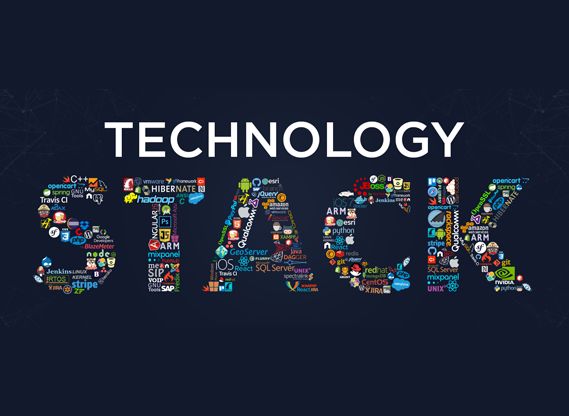
Think of a technology stack as the complete toolkit you need to build and run your application. It’s not just one piece of software—it’s a carefully selected combination of programming languages, frameworks, databases, and tools that work together to bring your project to life.
Every tech stack has two main parts: the frontend (what users see and interact with) and the backend (the behind-the-scenes magic that makes everything work). Your database sits in the middle, storing all the important information your application needs.
Why Your Tech Stack Choice Matters More Than Ever
In 2025, 90% of businesses are prioritizing cloud technology adoption in their software development. This shift isn’t just about following trends—it’s about survival. The right tech stack directly impacts everything from your development speed to your ability to scale and compete in the market.
A well-chosen stack helps you build faster, scale effortlessly, and maintain your application without headaches. The wrong choice? It leads to technical debt, frustrated developers, and ultimately, a product that can’t grow with your business.
Popular Technology Stacks Leading in 2025
Let’s look at what’s actually working for businesses right now:
MERN Stack (MongoDB, Express.js, React, Node.js)
The MERN stack remains incredibly popular because everything is JavaScript-based, making it easier for developers to work across the entire application. It’s perfect for building dynamic, real-time applications like social networks, collaboration tools, or streaming platforms.
MEAN Stack (MongoDB, Express.js, Angular, Node.js)
Similar to MERN but uses Angular instead of React. If you need a more structured, enterprise-level approach with built-in solutions for common problems, MEAN might be your answer.
LAMP Stack (Linux, Apache, MySQL, PHP)
Don’t let anyone tell you the LAMP stack is outdated. It’s still powering major platforms and offers proven reliability, extensive documentation, and cost-effective development. For content-heavy websites and traditional web applications, LAMP remains a solid choice.
Next.js Stack
Built on React, Next.js has become the go-to for modern web applications. Its server-side rendering capabilities improve SEO dramatically, while static site generation creates blazing-fast page loads. Companies building marketing sites, e-commerce platforms, or content-driven applications love Next.js.
Game-Changing Trends in 2025
The technology landscape is evolving rapidly. Here are the trends you need to know about:
AI Integration Everywhere
AI isn’t just for tech giants anymore. Modern tech stacks are incorporating AI capabilities directly into applications. From chatbots to predictive analytics, 76% of developers are using or planning to use AI tools in 2025. Consider stacks that support AI frameworks like Python with TensorFlow or JavaScript with ML libraries.
Cloud-Native Architecture
Cloud-native development ensures your application works seamlessly from anywhere, scales automatically, and supports distributed teams. It’s no longer optional—it’s essential for competitive businesses.
Microservices Over Monoliths
According to Gartner, 70% of new digital initiatives are being built using composable architecture principles, including modular tech stacks. Microservices allow different parts of your application to use different technologies, giving you flexibility and making updates easier.
Common Mistakes That Kill Projects
Let’s talk about what not to do, because learning from others’ mistakes is cheaper than making them yourself:
Chasing Trends Instead of Needs
Just because everyone’s talking about a new framework doesn’t mean it’s right for your project. A shocking 70% of enterprise technology projects fail due to poor stack selection. Choose based on your specific requirements, not hype.
Ignoring Your Team’s Expertise
Picking a cutting-edge technology your team doesn’t know creates delays, increases costs, and leads to more bugs. Your team’s skills should heavily influence your decision. Training takes time and money—factor that in.
Overlooking Long-Term Scalability
What works for 1,000 users might crash with 100,000. Always ask: “Can this technology grow with us?” Planning for scale from the start saves painful migrations later.
Underestimating Maintenance Costs
Some technologies require constant updates, security patches, and complex configurations. Consider the total cost of ownership, not just initial development costs. Technologies with strong communities, good documentation, and long-term support make maintenance significantly easier.
Overcomplicating Your Stack
Adding too many tools and technologies makes your stack harder to maintain. Keep it simple, especially in the beginning. Remember, Instagram had only 13 employees when Facebook acquired it for $1 billion. Start with an extensible foundation that can evolve, not an over-engineered system preparing for hypothetical scale.
How to Choose the Right Stack for Your Project
Here’s your practical framework for making the decision:
Start with your project requirements. What are you building? A real-time chat application needs different technologies than an e-commerce site or a content management system. Define your functional needs clearly.
Assess your team’s capabilities. What languages and frameworks does your team already know? Leveraging existing expertise typically leads to faster delivery and better outcomes.
Consider your timeline and budget. Some stacks let you build faster but might cost more to maintain. Others take longer to develop but offer better long-term economics. Balance your immediate needs with long-term sustainability.
Evaluate scalability requirements. Be realistic about your growth expectations. You don’t need to handle a million users on day one, but your stack should have a clear path to scale when needed.
Check community support and ecosystem. Strong communities mean solutions already exist for common problems. Look for frameworks with active development, regular updates, and extensive documentation.
Summary
Choosing the right technology stack isn’t about finding the “best” technology—it’s about finding the best fit for your specific project, team, and business goals. In 2025, the most successful projects balance innovation with practicality, choosing proven technologies that solve real problems rather than impressive-sounding tools that create new ones.
Remember: your tech stack is a foundation, not a prison. With thoughtful planning and the right approach, you can build on a solid base that grows with your business for years to come. Start with clarity about what you need, involve your team in the decision, and don’t be afraid to keep things simple. Your future self will thank you.